
Back to Blog
Arabic Learning Tips for Non-Native Students
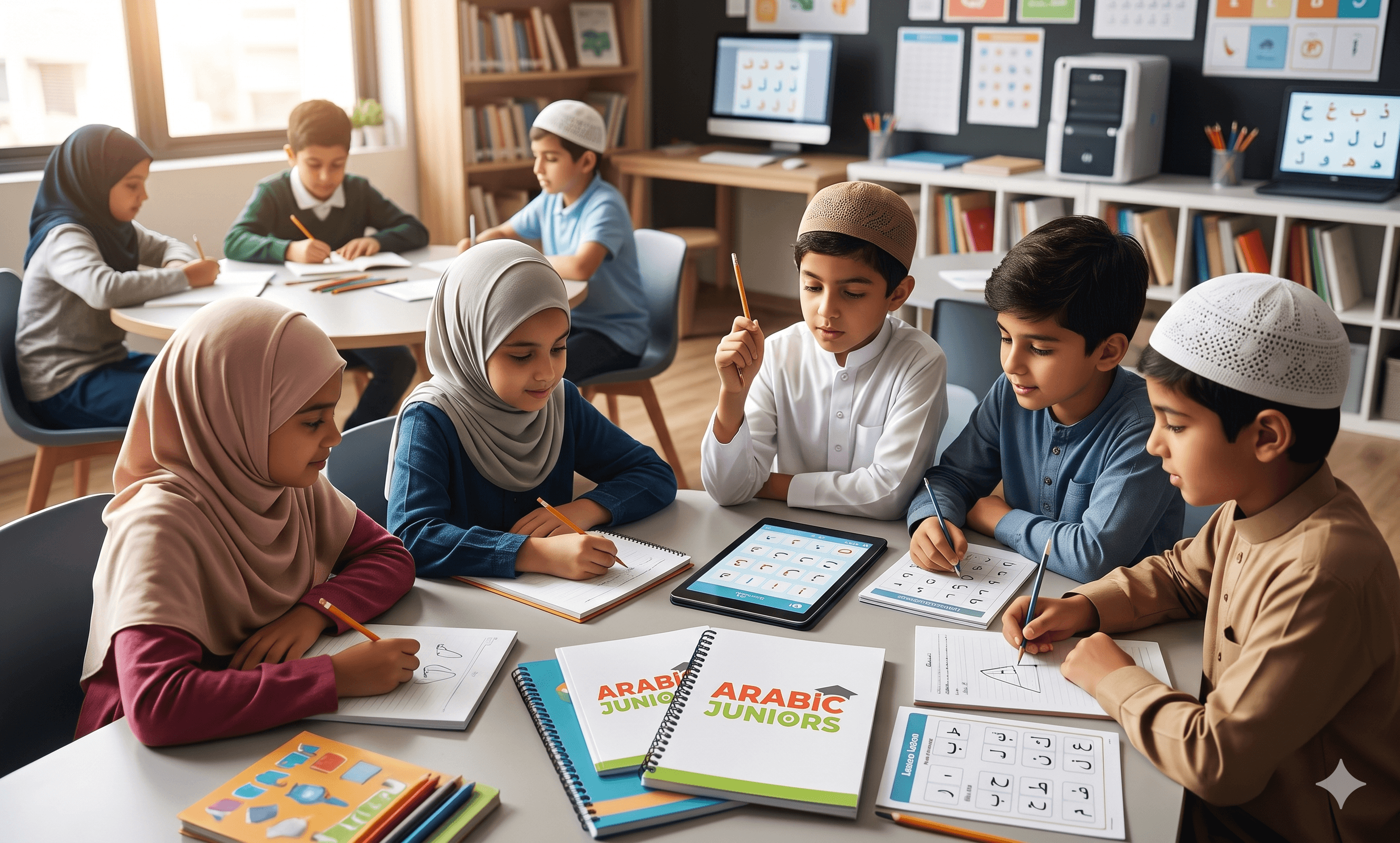
Arabic is one of the most spoken and influential languages in the world, with more than 400 million speakers across the Middle East and North Africa. It is the language of the Holy Quran, a key language for international business, diplomacy, travel, and education. Whether you're a student living in the UAE, an expat, or someone who wants to understand the Quran better, learning Arabic can open countless personal, academic, and professional opportunities.
However, for many learners, especially non-native Arabic speakers, mastering the language can feel overwhelming. The unique alphabet, pronunciation, grammar, and sentence structure often seem challenging at first. The good news is that with the right learning strategy, consistent practice, and expert guidance, anyone can become confident in Arabic.
Why Learn Arabic as a Non-Native Student?
Arabic is more than just another foreign language. It offers academic, cultural, religious, and career benefits.
Learning Arabic helps you:
Understand the Holy Quran in its original language.
Communicate confidently while living or traveling in Arab countries.
Improve career opportunities in the UAE, Saudi Arabia, Qatar, Oman, Kuwait, and Bahrain.
Enhance university applications and language certifications.
Build stronger connections with Arabic-speaking communities.
Gain a deeper appreciation of Arab culture and history.
For students living in the UAE, Arabic is also an essential school subject, making language proficiency beneficial for academic success.
Start with the Arabic Alphabet
Every successful Arabic learner begins with mastering the alphabet.
Unlike English, Arabic consists of 28 letters, written from right to left. Many letters change their shape depending on their position within a word.
When learning the alphabet:
Practice recognizing each letter.
Learn the correct pronunciation.
Write every letter repeatedly.
Understand beginning, middle, and ending forms.
Read simple letter combinations daily.
A strong foundation makes every future lesson easier.
Learn Common Arabic Vocabulary Daily
Vocabulary is one of the fastest ways to improve overall language skills.
Instead of memorizing hundreds of random words, focus on high-frequency vocabulary used in everyday conversations.
Start with categories such as:
Greetings
Family members
Numbers
Colors
Food
School items
Days and months
Common verbs
Daily activities
Aim to learn 10–15 new Arabic words every day and revise them regularly.
Focus on Arabic Pronunciation
Arabic contains several sounds that don't exist in English or many other languages.
For example, letters such as:
ع
ح
خ
ق
ص
ض
require specific mouth and throat movements.
To improve pronunciation:
Listen to native speakers.
Repeat words aloud.
Record your voice.
Compare your pronunciation.
Practice with an experienced Arabic teacher.
Correct pronunciation builds confidence in both speaking and reading.
Master Basic Arabic Grammar Step by Step
Many students fear Arabic grammar because it looks complicated.
Instead of learning everything at once, study grammar in small sections.
Begin with:
Sentence Structure
Understand how Arabic sentences are formed.
Pronouns
Learn personal pronouns and their usage.
Verb Conjugation
Study present, past, and future tense.
Gender Rules
Understand masculine and feminine nouns.
Singular, Dual, and Plural Forms
Arabic has unique plural patterns that require regular practice.
Mastering one topic at a time makes grammar much easier to understand.
Read Arabic Every Day
Reading strengthens vocabulary, grammar, pronunciation, and comprehension simultaneously.
Start with:
Children's books
Short stories
Arabic dialogues
School textbooks
News articles
Islamic articles
Quranic Arabic (for religious learners)
Reading aloud also improves speaking fluency.
Even 20 minutes of daily reading can produce noticeable improvement within a few months.
Practice Speaking Without Fear
One of the biggest mistakes non-native students make is waiting until they become "perfect" before speaking.
Instead:
Speak simple sentences.
Practice greetings.
Describe your daily routine.
Talk with Arabic-speaking friends.
Join conversation groups.
Attend live online Arabic classes.
Making mistakes is part of the learning process.
The more you speak, the faster your confidence grows.
Improve Listening Skills
Listening helps learners understand pronunciation, vocabulary, and sentence patterns naturally.
Useful listening resources include:
Arabic podcasts.
Educational YouTube channels.
Arabic children's programs.
Islamic lectures.
Audiobooks.
Native conversations.
Listen actively rather than passively.
Repeat difficult words until they become familiar.
Join Online Arabic Classes
Online learning has transformed language education.
The best online Arabic classes provide:
Live one-on-one lessons.
Native Arabic teachers.
Flexible schedules.
Interactive learning materials.
Speaking practice.
Homework support.
Personalized lesson plans.
Whether you're learning Modern Standard Arabic or conversational Arabic, structured guidance accelerates progress.
Build a Daily Arabic Study Routine
Consistency is far more effective than studying occasionally.
Sample Study Schedule
Vocabulary - 15 minutes
Grammar - 20 minutes
Reading - 20 minutes
Listening - 15 minutes
Speaking Practice - 15 minutes
Revision - 15 minutes
Just 60–90 minutes of daily practice can lead to significant improvement over time.
Use Flashcards for Faster Memorization
Flashcards remain one of the most effective vocabulary-learning techniques.
Include:
Arabic word
English meaning
Example sentence
Pronunciation
Review old flashcards every week to strengthen long-term memory.
Think in Arabic
Instead of translating every sentence into English, begin thinking directly in Arabic.
For example:
Name objects around you.
Describe what you're doing.
Count in Arabic.
Read signs aloud.
This simple habit improves fluency much faster.
Learn Arabic Through Real-Life Situations
Practical learning improves retention.
Practice Arabic while:
Shopping.
Ordering food.
Visiting local markets.
Talking with neighbors.
Traveling.
Reading street signs.
Students living in the UAE have excellent opportunities to practice Arabic every day.
Common Mistakes Non-Native Arabic Students Should Avoid
Many beginners struggle because they:
Skip pronunciation practice.
Ignore grammar.
Memorize without understanding.
Study irregularly.
Fear making mistakes.
Depend only on translation.
Avoid speaking.
Never revise vocabulary.
Recognizing these habits early helps students make faster progress.
Best Resources to Learn Arabic in 2026
To maximize your learning experience, combine different study resources:
Online Arabic courses.
Live Arabic tutors.
Language exchange partners.
Arabic dictionaries.
Flashcard apps.
Educational podcasts.
Arabic storybooks.
Interactive grammar exercises.
AI-powered language learning tools.
Daily writing journals.
Using multiple resources keeps learning engaging and effective.
Frequently Asked Questions
How long does it take to learn Arabic?
For beginners, basic conversational Arabic typically takes 6–12 months with consistent daily practice. Achieving advanced fluency may take several years, depending on study time and immersion.
What is the best way to learn Arabic for non-native speakers?
The most effective approach combines learning the Arabic alphabet, building daily vocabulary, studying grammar gradually, practicing speaking, and taking structured online Arabic classes with qualified teachers.
Can I learn Arabic online?
Yes. Many learners successfully study Arabic through online Arabic classes, live tutoring sessions, interactive apps, and digital learning platforms that offer personalized lessons and flexible schedules.
Is Arabic difficult to learn?
Arabic can be challenging at first due to its script and grammar, but with regular practice, proper guidance, and consistent revision, it becomes much easier over time.
Final Thoughts
Learning Arabic as a non-native student is a rewarding journey that requires patience, consistency, and the right learning strategy. By mastering the Arabic alphabet, building vocabulary every day, practicing pronunciation, studying grammar step by step, and engaging in regular speaking and listening exercises, you can steadily develop confidence and fluency.
Whether your goal is to improve school performance, communicate confidently in Arabic-speaking countries, advance your career, or understand the Quran, following a structured study plan and enrolling in online Arabic classes can help you achieve lasting success. Remember, language learning is not about perfection—it's about making steady progress every day.
Latest Blog
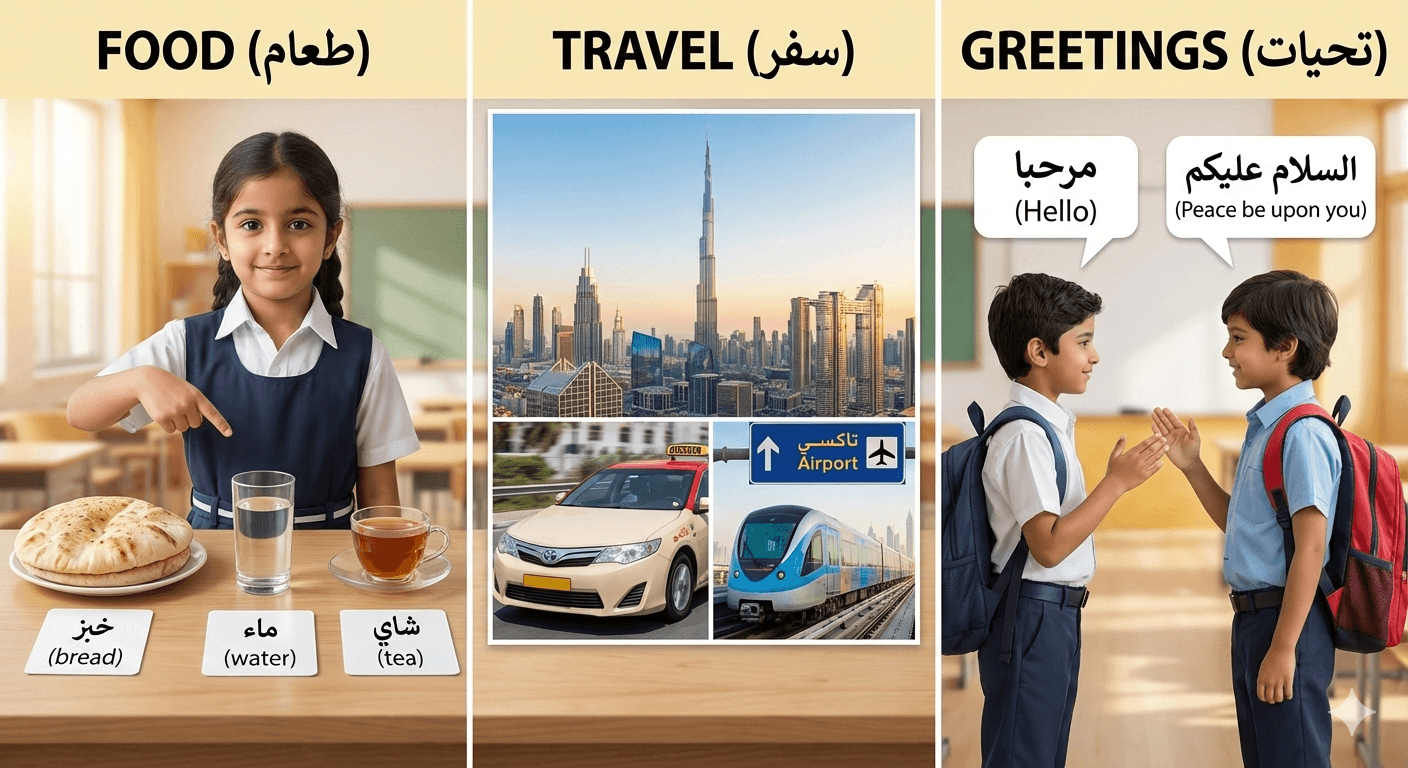
Learn Arabic Words by Them...
Learn Arabic words by theme in the UAE. Simple food, travel, and greeting v...
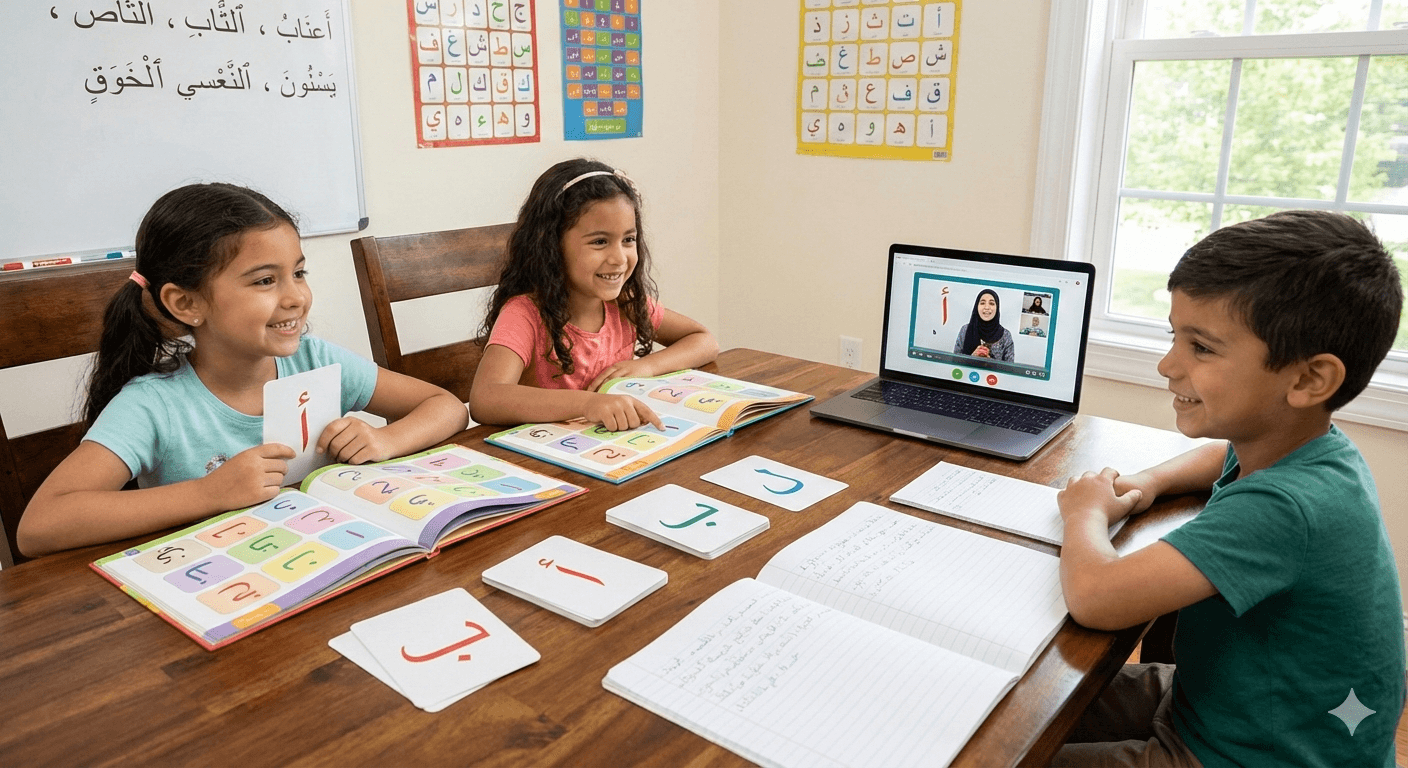
Why Learning Arabic Is Imp...
Why Learning Arabic Is Important: Benefits for Students and Professionals.

Arabic for Beginners UAE O...
Introducing Arabic at an early age boosts memory, focus, and overall school...

Top 5 Signs Your Child Nee...
Is your child studying Arabic as part of the MOE or CBSE curriculum in the ...
Start your journey today
Fuel Your Day with Inspiring Emails!