
Back to Blog
How to Write “Myself” in Arabic: Simple Examples for School Students
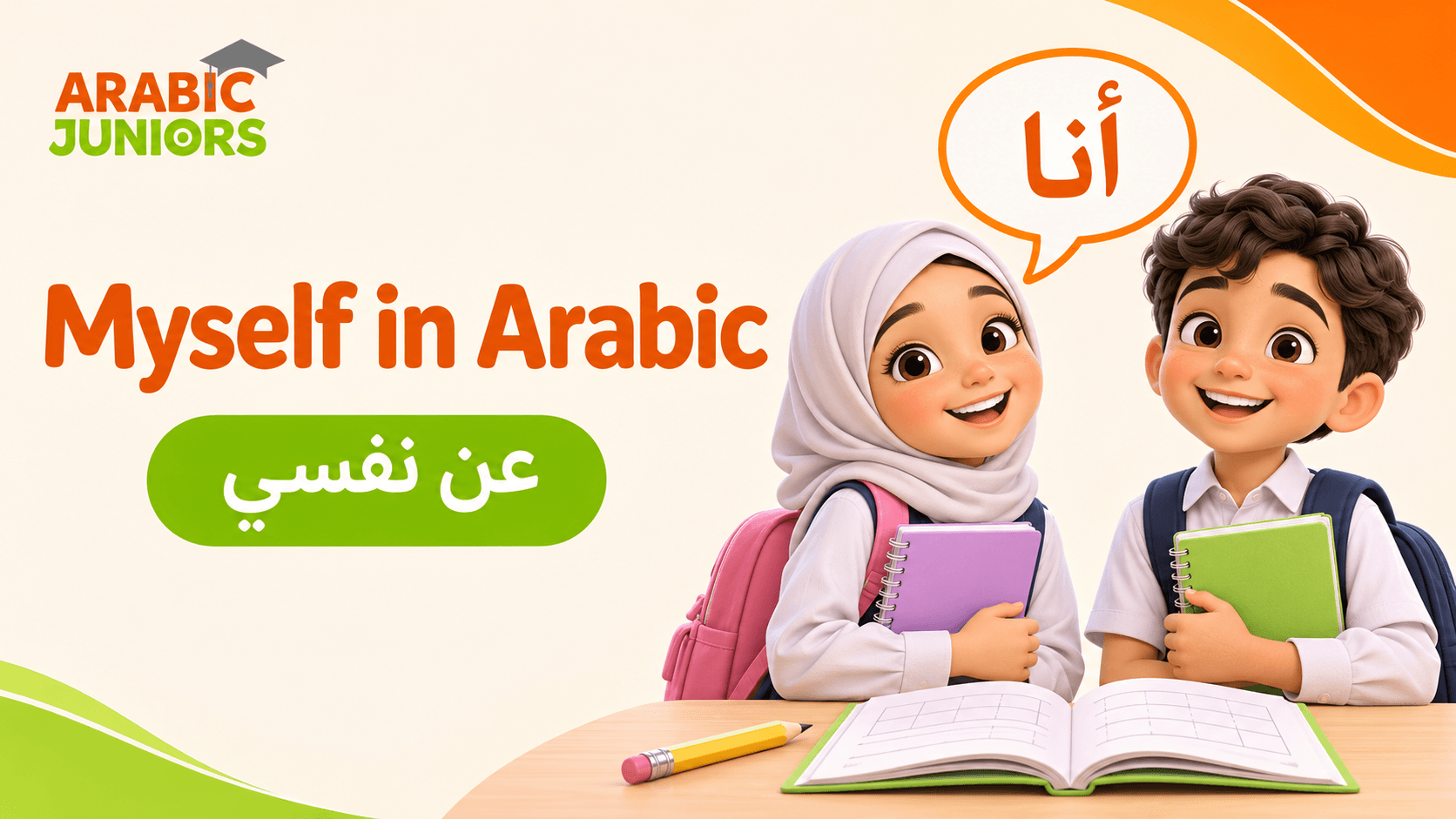
Writing about yourself is a useful first step in learning Arabic. It helps you practise familiar vocabulary, build complete sentences, and share information about your name, age, school, family, and interests.
If you are wondering how to write “Myself” in Arabic, begin with a few short sentences you understand. You can then combine them into a paragraph and practise saying them aloud.
This guide includes useful expressions, five-line and ten-line examples, English translations, and a simple template for school students.
What Is “Myself” in Arabic?
The English word “myself” can have different Arabic translations depending on the sentence. نفسي means “myself” or “my self” in suitable contexts, but it is not a substitute for every English use.
For a school composition about yourself, suitable headings include:
عن نفسيAbout myself
التعريف بنفسيIntroducing myself
Use the heading your teacher requests. For a simple “Myself” paragraph, عن نفسي is a useful starting point.
What Should an Arabic Self-Introduction Include?
A short self-introduction in Arabic can cover:
Your name.
Your age.
Where you are from.
Where you live.
Your class or grade.
Your school.
Your interests.
Your favourite subject.
Choose information relevant to the assignment. For classroom examples, first names and a city are enough; there is no need to include a full home address.
Simple Arabic Sentences About Yourself
These sentence patterns help beginners write an introduction one line at a time.
اسمي أحمد.My name is Ahmed.
عمري عشر سنوات.I am ten years old.
أنا من الهند.I am from India.أسكن في د
بي.I live in Dubai.
أنا في الصف الرابع.I am in Grade Four.
أحب مدرستي.I love my school.أحب القرا
ءة.I like reading.
هوايتي الرسم.My hobby is drawing.
أحب تعلم اللغة العربية.I like learning Arabic.
أريد أن أصبح طبيبًا.I want to become a doctor. — male speaker
Change the details so the sentences describe you accurately. A teacher can help you write your name, school name, and age correctly.
How to Write “Myself” in Arabic Step by Step
1. Start With Your Name
Use اسمي to introduce your name.
اسمي سارة. My name is Sara.
اسمي عمر. My name is Omar.
There is no need to translate “My name is” word by word. اسمي already means “my name,” and this sentence does not require a separate present-tense word for “is.”
2. Add Your Age
Use عمري followed by your age.
عمري ثماني سنوات. I am eight years old.
عمري تسع سنوات. I am nine years old.
عمري عشر سنوات. I am ten years old.
Arabic number expressions follow grammatical patterns, so avoid replacing one number with another without checking the complete phrase.
3. Say Where You Are From and Where You Live
These sentences express different ideas:
أنا من الهند. I am from India.
أسكن في أبو ظبي. I live in Abu Dhabi.
Your country of origin and the city where you live may be different. Include both if they are relevant.
4. Mention Your Grade and School
أنا في الصف الثالث. I am in Grade Three.
أدرس في مدرسة النور. I study at Al Noor School.
For British-curriculum students, ask your teacher how to express your particular school year rather than automatically treating “Year” and “Grade” as equivalent.
5. Add a Hobby or Interest
Use أحب for “I like” or “I love.”
أحب الرسم. I like drawing.
أحب القراءة. I like reading.
أحب كرة القدم. I like football.
You can combine interests:
أحب القراءة والرسم. I like reading and drawing.
For more ways to build useful vocabulary, explore Arabic learning tips for non-native students.
Five Sentences About Myself in Arabic
This short example suits beginners who are ready to write complete sentences.
عن نفسي
اسمي أحمد. My name is Ahmed.
عمري ثماني سنوات. I am eight years old.
أسكن في دبي. I live in Dubai.
أنا في الصف الثالث. I am in Grade Three.
أحب القراءة والرسم. I like reading and drawing.
Read each sentence, explain its meaning, and then replace Ahmed’s details with your own.
Ten Lines About Myself in Arabic: Example for a Boy
This example adds school, family, and future goals.
اسمي عمر.My name is Omar.
عمري عشر سنوات.I am ten years old.
أنا من الهند.I am from India.
أسكن في الشارقة.I live in Sharjah.
أنا طالب في الصف الخامس.I am a student in Grade Five.
أدرس في مدرسة النور.I study at Al Noor School.
أحب أسرتي ومدرستي.I love my family and my school.أحب لعب كرة الق
دم.I like playing football.
مادتي المفضلة هي الرياضيات.My favourite subject is mathematics.
أريد أن أصبح مهندسًا.I want to become an engineer.
The school name and personal details are illustrative. Replace them before using the paragraph.
Ten Lines About Myself in Arabic: Example for a Girl
Some words change when a girl describes herself, such as طالبة instead of طالب.
اسمي مريم.My name is Maryam.
عمري تسع سنوات.I am nine years old.
أنا من باكستان.I am from Pakistan.
أسكن في أبو ظبي.I live in Abu Dhabi.
أنا طالبة في الصف الرابع.I am a student in Grade Four.
أدرس في مدرسة الأمل.I study at Al Amal School.
أحب أسرتي وصديقاتي.I love my family and my female friends.
هوايتي القراءة.My hobby is reading.
مادتي المفضلة هي اللغة العربية.My favourite subject is Arabic.
أريد أن أصبح طبيبة.I want to become a doctor.
First-person expressions such as اسمي، أسكن، أحب and أريد remain the same for a boy or girl. Certain nouns and descriptions change.
A Short Arabic Paragraph About Myself
Once you understand the sentences, combine them into a paragraph.
عن نفسي
اسمي مريم. عمري تسع سنوات. أسكن في أبو ظبي. أنا طالبة في الصف الرابع. أحب مدرستي وأحب تعلم اللغة العربية. هوايتي القراءة والرسم. أريد أن أصبح طبيبة.
English translation:
My name is Maryam. I am nine years old. I live in Abu Dhabi. I am a student in Grade Four. I love my school and enjoy learning Arabic. My hobbies are reading and drawing. I want to become a doctor.
Notice that the paragraph uses short, connected ideas. Beginners can write clearly without using complicated vocabulary.
Fill-in-the-Blanks Arabic Self-Introduction Template
Complete each sentence with your own information.
اسمي ________.Your name
عمري ________.Your complete age expression
أنا من ________.Your country
أسكن في ________.Your city
أنا في الصف ________.Your grade
أدرس في مدرسة ________.Your school name
أحب ________.Something you like
هوايتي ________.Your hobby
Practice method:
Complete four sentences using the examples.
Read them aloud with a teacher.
Check the meaning of every word.
Add two more details.
Write the introduction again without copying.
To practise recognising words while reading your introduction, visit Arabic reading strategies for school students.
Useful Vocabulary for “Myself” in Arabic
اسمName
عمرAge
أسرةFamily
مدرسةSchool
صفClass or grade
طالبMale student
طالبةFemale student
هوايةHobby
القراءةReading
الرسمDrawing
السباحةSwimming
كرة القدمFootball
اللغة العربيةArabic language
الرياضياتMathematics
العلومScience
Learn vocabulary through complete sentences. For example, practise أحب السباحة rather than memorising السباحة alone.
Common Mistakes When Writing About Yourself in Arabic
Using the Wrong Student Form
A boy can write:
أنا طالب. I am a student.
A girl can write:
أنا طالبة. I am a student.
Check nouns and descriptions that refer to the speaker.
Translating Every English Word Separately
English and Arabic sentence structures do not always match. Learn complete patterns such as اسمي أحمد and أسكن في دبي.
Confusing “From” With “Live In”
أنا من الهند describes where you are from.
أسكن في دبي describes where you live.
Copying Details That Are Not Yours
A model paragraph helps you learn the structure. Change the name, age, city, school, and interests to create your own introduction.
Memorising Without Understanding
Ask yourself what each sentence means. Try changing one detail to check whether you understand the pattern.
For further revision, read common Arabic grammar mistakes and how to avoid them.
How Parents Can Help With Arabic Writing Practice
Start with three or four sentences your child understands. Ask them to explain the meaning, choose their own details, and read the finished introduction aloud.
Use teacher feedback to select one improvement at a time, such as spelling, letter formation, or using طالب and طالبة correctly.
Arabic Juniors offers school-focused Arabic tuition covering reading, writing, speaking, listening, and grammar. Parents can explore its online Arabic classes for school students and discuss the support their child needs. arabicjuniors.com
Frequently Asked Questions
How do you write “About Myself” in Arabic?
A suitable heading is عن نفسي, meaning “About myself.” التعريف بنفسي means “Introducing myself” and is another useful option.
How do I introduce myself in Arabic?
Begin with اسمي and your name. Then add your age, city, grade, and one or two interests.
How do you say “My name is” in Arabic?
Use اسمي, followed by your name. For example, اسمي سارة means “My name is Sara.”
Can boys and girls use the same Arabic self-introduction?
Many sentence patterns are shared, including اسمي، عمري، أسكن and أحب. Some nouns and descriptions change, such as طالب and طالبة.
How many lines should a school self-introduction contain?
Follow your teacher’s instructions. Beginners can start with five clear sentences and add more details as their vocabulary develops.
Should I use formal Arabic or a spoken dialect?
For a written school assignment, use Modern Standard Arabic unless your teacher requests a particular dialect or another format.
Write Your Own Arabic Introduction
Begin with your name, age, city, and school information. Add a hobby or favourite subject, then check that every sentence describes you accurately.
For guided writing and speaking practice, book a free Arabic Juniors trial class and share your child’s current school assignment.
Latest Blog
Why Learning Arabic Is Imp...
Why Learning Arabic Is Important: Benefits for Students and Professionals.
Arabic Learning Tips for N...
Discover expert Arabic learning tips for non-native students. Improve speak...
Learn Arabic for Kids Onli...
Discover how to learn Arabic for kids with online Arabic classes for kids. ...

Preparing Your Child for a...
We provide online Arabic tuition in UAE for students in Grade 1 to Grade 10...
Start your journey today
Fuel Your Day with Inspiring Emails!


